About the Faculty
OVERVIEW
The Faculty of Military Science and Interdisciplinary Studies (FMSIS) of the Nigerian Defence Academy was established to respond to the rapidly evolving nature of modern defence, digital-age security challenges, and the increasing intersection between military operations, technology, and national development. As the only military university in West Africa, the Academy created the Faculty to provide structured, interdisciplinary academic programmes that address contemporary defence and security demands while strengthening its identity as a degree-awarding institution.
FMSIS serves as a strategic hub for curriculum development and academic realignment across departments and military formations. It promotes innovative teaching, research, and postgraduate training across fields such as intelligence, cybersecurity, computing, security studies, and related disciplines. The Faculty also supports the integration of civil and military knowledge systems to produce graduates capable of addressing complex national and global security challenges.
In 2019, significant structural reforms were implemented: Computer Science was transferred from the Faculty of Science to FMSIS, Logistics and Supply Chain Management was moved to the Faculty of Management, while the Department of Intelligence and Cyber Security was split into the Department of Cyber Security and the Department of Intelligence and Security Studies.
DESCRIPTION AND FUNCTIONS
The Faculty of Military Science and Interdisciplinary Studies is an academic and professional unit responsible for delivering integrated military education combined with diverse academic disciplines. It prepares cadets and postgraduate students for effective performance in modern security environments where military operations intersect with political, economic, technological, and social dimensions.
The Faculty delivers instruction in military strategy, leadership, defence studies, cybersecurity, international relations, engineering, psychology, and management. This interdisciplinary structure enhances critical thinking, analytical ability, and adaptability required for both military and civilian leadership roles.
Beyond academics, FMSIS emphasizes leadership development, ethics, innovation, and research. It contributes to national and global security by producing professionals equipped to handle challenges such as terrorism, peacekeeping, disaster response, intelligence operations, and technological warfare.
CORE FUNCTIONS
Military Education and Training
• Provides structured training in tactics, weapon systems, and operational planning
• Develops cadets’ discipline, physical fitness, and combat readiness
• Prepares cadets for effective military service upon commissioning
Leadership Development
• Builds leadership, decision-making, and teamwork skills
• Trains cadets for command and management responsibilities
• Promotes ethical leadership and accountability
Strategic and Tactical Studies
• Teaches defence planning, warfare studies, and military strategy
• Analyzes historical and contemporary conflicts for operational learning
• Prepares cadets for strategic-level military roles
Research and Development
• Conducts research in defence technology, cybersecurity, and conflict studies
• Contributes to national security policy development
• Supports innovation in military doctrine and operations
National Security and Defence Awareness
• Educates cadets on global and national security challenges
• Promotes patriotism and commitment to national service
• Supports defence and security policy implementation
Professional Military Preparation
• Prepares cadets for commissioning into the Armed Forces of Nigeria
• Provides branch-specific military knowledge for Army, Navy, and Air Force
• Ensures readiness for peacekeeping and combat operations
Physical and Character Development
• Builds physical endurance, resilience, and mental toughness
• Instils discipline, integrity, and moral responsibility
• Develops officers with strong ethical foundations for service
Overall, FMSIS functions as a bridge between traditional military education and modern interdisciplinary scholarship, producing well-rounded officers and professionals capable of addressing emerging security challenges.
Departments
Research Focus Areas
• Conducts research in defence technology, cybersecurity, and conflict studies
• Contributes to national security policy development
• Supports innovation in military doctrine and operations
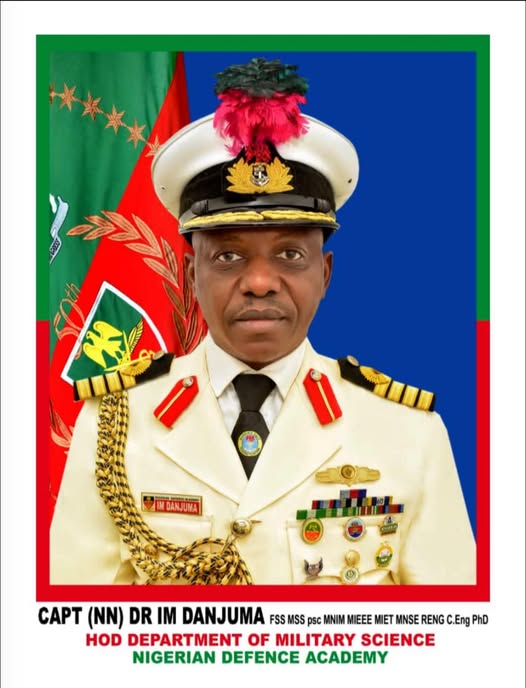
Dean
Dr Isah Musa Danjuma
Faculty of Military Science and Interdisciplinary Studies
— — Present
View Full Profile