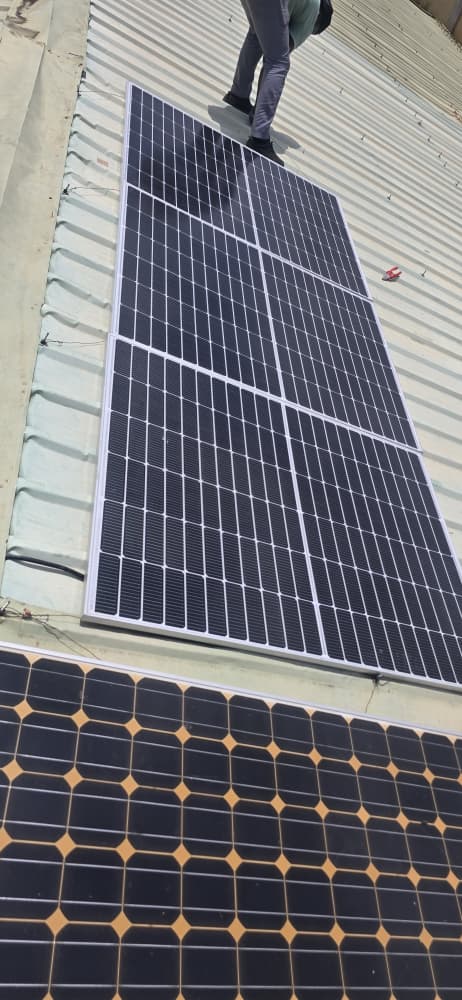
NDA Centre for Renewable Energy Completes Successful PGD Project Installation
Jul 13, 2026
Academic Branch — Nigerian Defence Academy
Background and Rationale
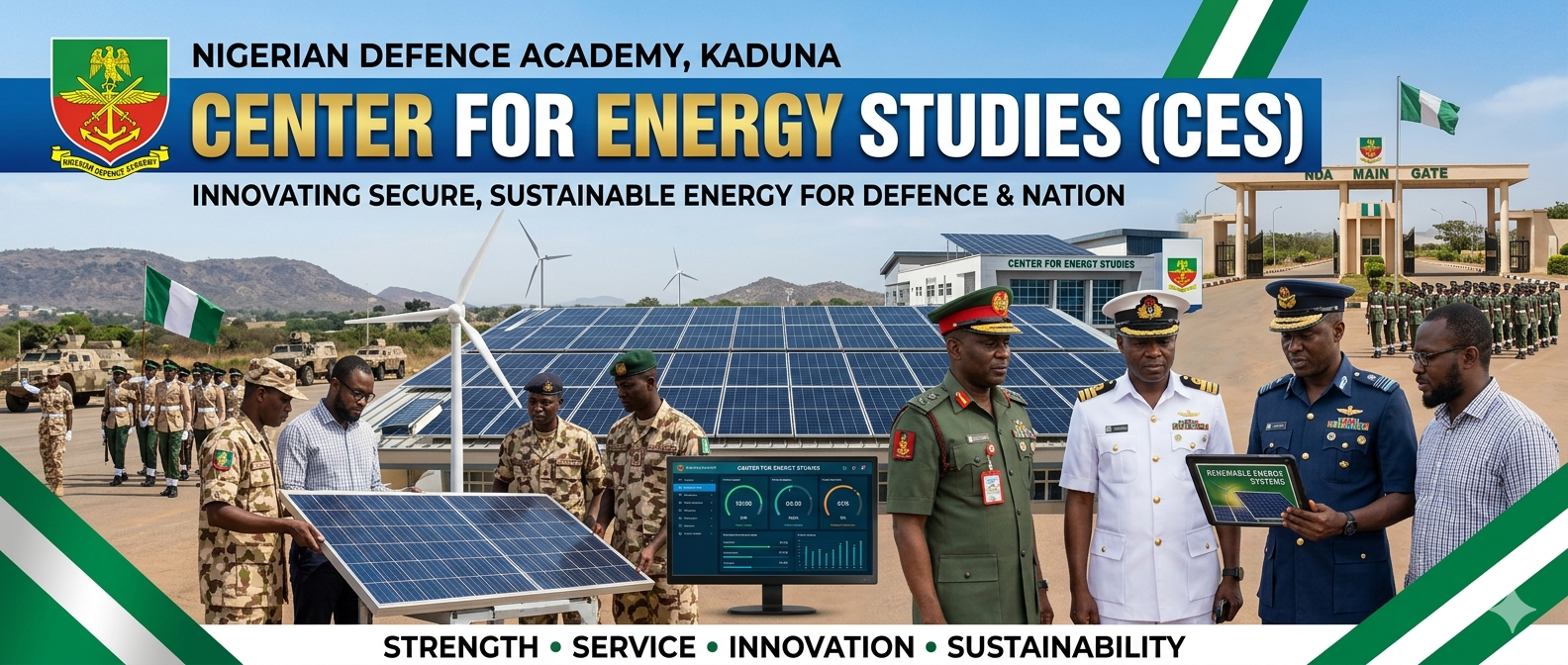
Energy plays a vital role in national security, military operations, and strategic infrastructure. The Nigerian Defence Academy, as Nigeria’s premier military university, requires advanced capacity in energy research to support defense operations, critical infrastructure, and national resilience.
Nigeria faces challenges such as unreliable power supply, vulnerability of energy infrastructure, dependence on fossil fuels, and emerging threats to energy security. A Center for Energy Studies (CES) at NDA will provide a strategic platform to address these issues through research, innovation, and military-focused energy solutions.
Vision
To be a center of excellence in energy research and innovation supporting military capability and national energy security.
Mission
To develop cutting-edge energy solutions, enhance military operational efficiency, and provide policy support on energy security through research, training, and strategic partnerships.
Objectives
· Strengthen energy security for military operations and national defense.
· Build capacity of military personnel and civilians in energy management.
· Promote research in both conventional and renewable energy systems.
· Enhance resilience of military energy infrastructure.
· Provide policy and strategic advisory services on energy security.
Core Mandates and Functions
1. Defense Energy Research and Innovation
· Conduct research on energy systems for military applications (e.g., battlefield energy systems, mobile power units).
· Develop innovative and resilient energy technologies for defense operations.
2. Military Energy Security and Resilience
· Assess risks and vulnerabilities in military energy supply chains.
· Develop strategies for energy security, redundancy, and resilience in defense installations.
3. Renewable and Alternative Energy for Defense
· Promote solar, wind, and hybrid energy systems for military bases and remote operations.
· Reduce dependence on diesel and fossil fuels in military facilities.
4. Oil, Gas, and Strategic Energy Resources
· Study the role of oil and gas in national defense and economic security.
· Support protection and strategic management of critical energy assets.
5. Energy Policy, Strategy, and Advisory Services
· Provide expert advice to the Armed Forces and government on energy-related matters.
· Contribute to national energy security policy and defense strategy.
6. Power Systems and Military Infrastructure
· Research reliable and secure power systems for barracks, bases, and command centers.
· Promote smart grids and decentralized energy systems for military use.
7. Capacity Building and Training
· Train military personnel, cadets, and civilians in energy management and security.
· Develop specialized courses on defense energy systems and sustainability.
8. Strategic Partnerships and Collaboration
· Collaborate with defense institutions, energy companies, and research organizations.
· Engage in joint research with national and international partners.
9. Energy Data, Intelligence, and Monitoring
· Develop databases on energy consumption and security risks.
· Support intelligence gathering related to energy infrastructure threats.
10. Community and National Energy Support
· Support rural electrification projects as part of civil-military cooperation.
· Provide technical expertise for national energy development initiatives.
11. Environmental Sustainability and Safety
· Promote environmentally responsible energy use in military operations.
· Ensure compliance with environmental and safety standards.
12. Innovation and Commercialization
· Support development of defense-related energy technologies.
· Facilitate commercialization of innovations where applicable.
Organizational Structure
The Center consists of:
· Director (Senior Academic Officer) :Usually a Professor who specialize in renewable or non- renewable energy
· Deputy Director (Research and Operations): Headed by a reader or Senior Lecturer
Core Units:
· Defense Energy Systems Unit
· Renewable Energy and Sustainability Unit
· Energy Policy and Security Unit
· Power Systems and Infrastructure Unit
· Administrative and Technical Support Staff
(Note that each unit will be headed by an academic staff not below the rank of a senior lecturer)
Key Activities
· Defense-focused energy research projects
· Policy advisory reports to military and government
· Training programs for officers, cadets and civilian
· Workshops, seminars, and defense energy conferences
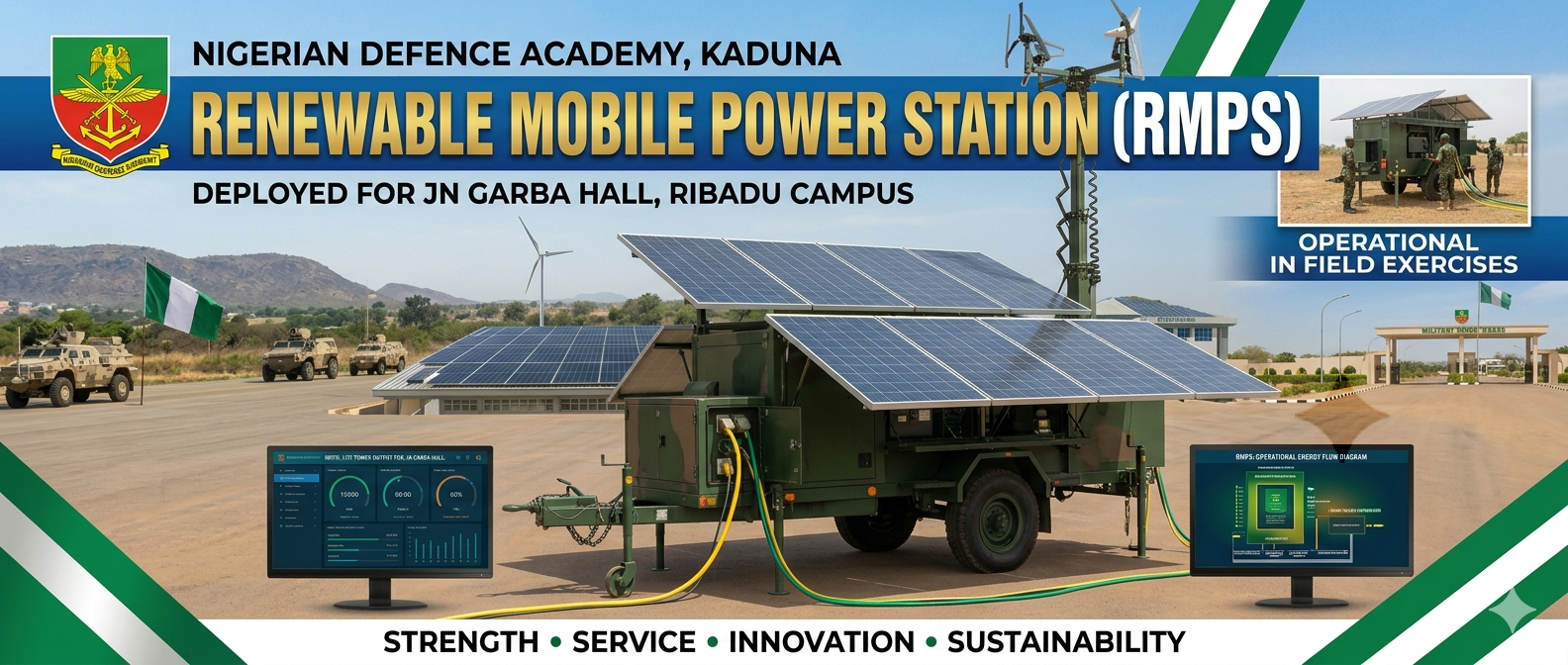
· Pilot projects (e.g., solar-powered barracks, hybrid energy systems and mobile power units)
Since its transformation, the Centre has recorded remarkable milestones:
1. Postgraduate Diploma (PGD) in Renewable and Sustainable Energy has been launched, offering foundational technical skills in clean energy systems for professionals and military personnel.
2. Professional Master’s Programme in Renewable and Sustainable Energy is now operational, emphasizing hands-on and managerial competence in deploying clean energy systems.
3. Academic MSc Programme has been developed, focusing on advanced theoretical and research-based knowledge to groom policy-makers, educators, and innovators in renewable energy.
4. PhD Programme Curriculum in Renewable and Sustainable Energy has also been developed to train high-level scholars capable of conducting impactful and transformative renewable energy research.

Director
View full profile
Outreach
Latest updates and events from Center for Energy Studies.